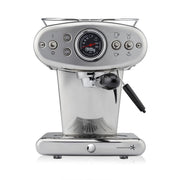
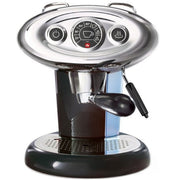
Francis Francis X7 Iper Espresso Review:
Things I like:
1) The "Look"
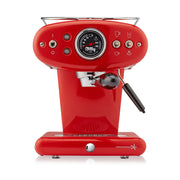
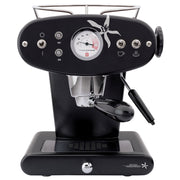
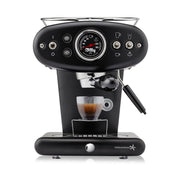
: The machine has a very cool Retro look to it with lots of curvy lines that will catch any ones eyes.
2) Set-up: I love how easy it is to set up this machine. You fill the water reservoir, plug the machine in; it primes itself and starts to heat. You are ready to brew when the machine chimes and the display goes from orange to a pleasing blue color.
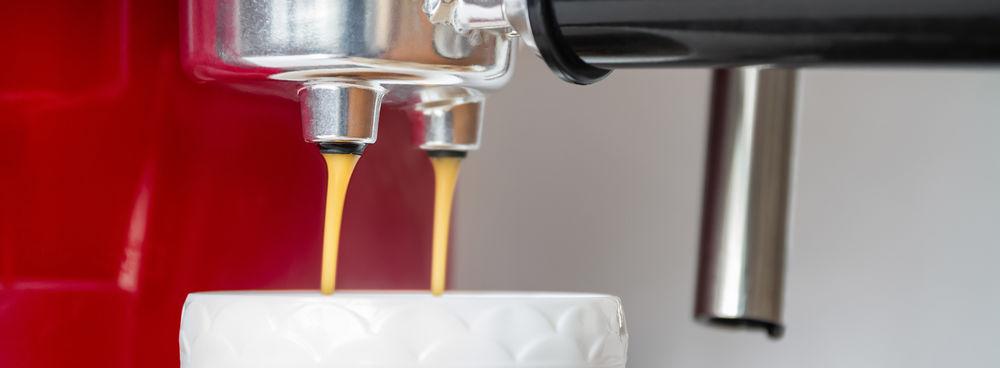
3) Easy brewing with minimal clean up: To brew, you simply place an Iper Illy Capsule into the porta filter, lock it into the brew group, push a brew button, and you are brewing. Clean up after brewing requires removing the porta filter, throwing the used capsule away, and wiping the counter.
4) Steaming volume: The Francis Francis provides almost continuous steam for easy steaming and frothing of milk for your lattes or cappuccinos.
5) Porta Filter construction: The porta filter is easy to lock into the brewgroup, made from heavyduty brass (to prevent heat loss when brewing ), and is chrome-plated.
Things I do not like:
1) The cup warmer design: The cup warmer does not hold many cups and is tilted towards the back, which makeit a bit difficult to keep cups from sliding to the back the machine
2) Brewing noise: The pump also is a bit loud (not enough to wake a household in the morning) however, this could be because I am brewing on a very hard surface.
Overall the Francis Francis X7 Iper Espresso machine is a good home use espresso machine. I would also say it could be used in a small office setting (of less than 5 people) who like Illy coffee and the easy use single serve espresso pods.
There are some pretty impressive gourmet restaurants out there. At times, the food may be debatable, but the presentation is always impeccable. Great chefs know that a part of the culinary experience lies in the table service. You just don't serve a gourmet meal on disposable plates. And, so it is with fine espresso. But, it's not solely aesthetics; the cup you're extracting into could have a tangible impact on your espresso.
Everything from the shape, size and material of a cup should be taken into account. Though there is no "standard" shape for an espresso cup, most of them tend have to a softly rounded form that is narrow at the bottom and gets progressively wider at the rim. The wider opening at the top is said to enhance crema presentation, while narrow bottom encourages espresso flavor concentration. The shape also allows to the cup to retain heat evenly so that you don't get hot and cold spots within your beverage.
The size of the cup is also critical. A widely respected espresso authority, the World Barista Championship (WBC), states in its Rules and Regulations that espresso must be served in two- to three-ounce (60-90ml) cups with handles. The Gaggia Logo, Rancilio Logo, Pasquini Logo, Illy Almodovar and Julian Schnabel espresso cups are all solid choices that fall within WBC guidelines. Espresso cups are made tiny for a reason. The compact size of the espresso cup is designed to promote heat retention by reducing the surface area exposed to the air. Also, a single shot of espresso is only 1-1.5 fl.oz, while a double shot barely tips the scale at 2-2.5 fl.oz, so the espresso would be lost in a large cup. A 2-ounce cup is perfect for a single shot; if you're brewing a double go for a 3-ounce demitasse.
Espresso-machine manufacturers go through great lengths to ensure heat stability during the brewing process, but once the espresso is extracted, it's up to the cup to prevent heat loss. We always advocate preheating your cups, but you can also guard against premature cooling by paying close attention to the material of your espresso cup. Most demitasses are made of porcelain, as it is an excellent insulator. Though, you should keep in mind that there are different grades of porcelain. Porcelain created using high firing temps is tougher and more durable; most connoisseurs prefer thick porcelain espresso cups like the Bodum Pavina Grip Porcelain, Francis Reptilia or Gaggia Platinum cups. Also particularly adept at heat preservation are double-walled cups. The contents stay hot while the exterior of the cups remain cool to the touch; if this is appealing to you, check out the Bodum Pavina, Assam or Canteen Glass cups. Of course, glass cups also have the added advantage of allowing you to see and appreciate your espresso.
The first coffee was rumored to have been consumed in Ethiopia around 850 AD. Today, other than water, coffee is the most widely consumed beverage in the world. Over 400 billion cups are consumed every year. Thirty-five percent of the world’s coffee is consumed in the United States. The coffee industry employs over 25 million people.
Here is a quick look at the inventions that have made coffee consumption so popular:
Today, many manufactures use single-serve options for brewing coffee that have filters built in. Popular brands include: Nespresso, Illy, Gaggia, Keurig and Tassimo, to name a few. The average American can create the desired drink in seconds, with the perfect amount of coffee, temperature and no cleanup. The development of single-serve systems can trace its roots back to the humble paper filter.
Many single serve options, consists of a “filter” that contains an exact amount of coffee, ground specifically to create a unique coffee drink. The packaging prevents oxygen, light and moisture from degrading the coffee. Each cup of coffee produced is of the highest quality and freshness. Several well-known coffee roasters, such as Green Mountain Coffee Roasters, have created branded single-serve coffee options.
Illy and the iperEspresso SystemIlly has evolved into a world renowned manufacturer of coffee. Illy coffee is available in medium or dark roasts; regular or decaffeinated; whole bean, fine and medium grinds; as well as E.S.E. (Easy Serving Espresso) pods and iperEspresso capsules.
Illy’s introduction of the iperEspresso System has revolutionized the preparation of espresso. This patented two-part process replaces the traditional manner in which espresso was extracted. In the first stage called “iper-infusion,” hot water under high pressure creates optimal brewing conditions within the iperChamber to enhance the extraction of coffee flavor and aroma and increase its richness and complexity. In the second stage, “emulsification,” coffee is forced through the patented e-valve at the bottom of the capsule, mixing with air to produce a velvety, long-lived crema. Illy’s iperEspresso capsules are compatible with the FrancisFrancis X7 and Gaggia for Illy Single-Serve Espresso Machines.
The Modern Espresso Machinehe modern-day espresso machine was created by Gaggia in 1946. It has experienced subtle changes since its inception. The technology and use of commercial components have not changed. Consumers who want to achieve an authentic espresso or milk-based drink from home are rarely disappointed. The machines offer the option to use ground coffee or pods. Recently, Gaggia introduced a new pressurized portafilter basket that takes the guesswork out of creating perfect crema. This filter basket is compatible with all the semi-automatic Gaggia Espresso machines currently on the market. Additionally, the popular Gaggia Baby series introduced a new model that has dual boilers, perfect for temperature stability and creating milk based drinks with ease.
As you can see several inventions, introduced to coffee drinkers over 75 years ago, still have an impact on how we enjoy this beverage. It will be exciting to see how the coffee drinking experience continues to evolve in the next decade.
Tracy