Call for Expert Advice: 1-888-411-5282

"illy Espresso Coffees; The world’s coffee of choice…"

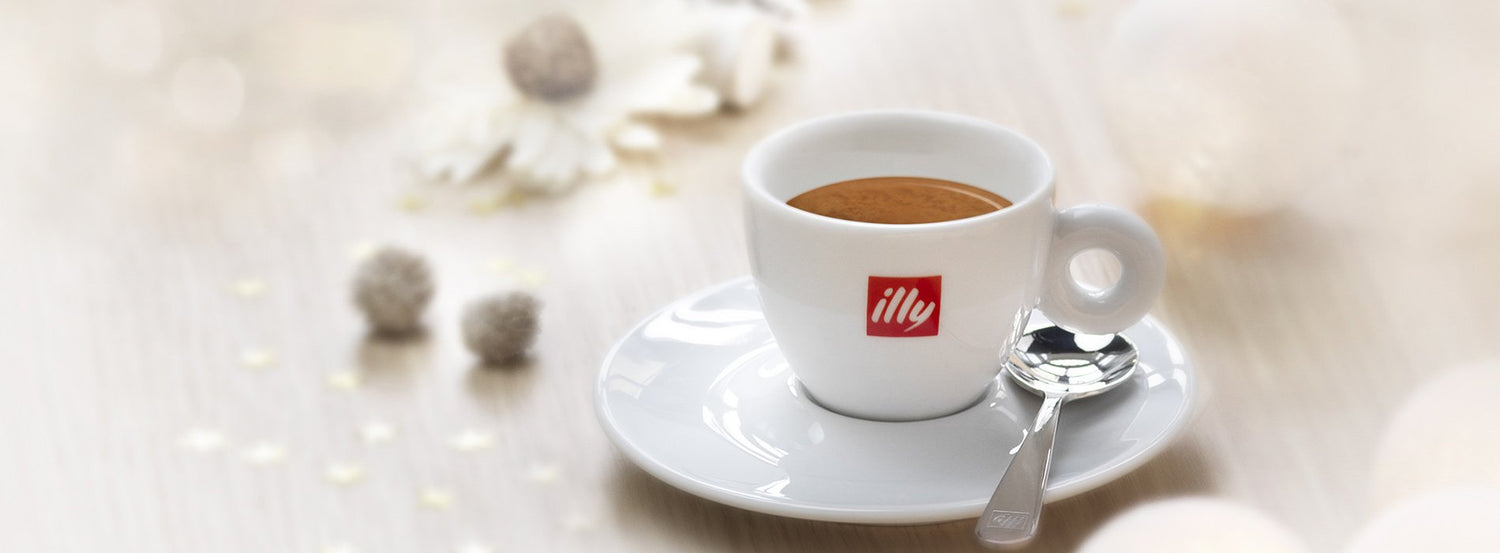
Discover the extraordinary pleasure of illy, the celebrated Italian espresso coffee served in the finest restaurants and cafés and enjoyed by coffee connoisseurs worldwide. A blend so popular, it is served in Italy alone over 2 million times a day. Prized for its full, rich body and smooth, balanced flavor, illy's signature blend is meticulously selected and is 100% sustainably grown Arabica coffee. Espresso at its finest!

Try the latest Mono-Arabica single origin choices from the best coffee growers around the world.

illy

Sort by:
Sale $14.24
Reg: $14.99
A famous blend used by baristas around the world. No sales tax! A can contains 8.8oz ofwhole-bean de-caf coffee. Available in lots of 1 or 2 cans, or cases of 6.
We Price Match!
On Sale! $14.24
Reg Price $14.99
No Sales Tax

quantity:

Rating: Read Reviews
A famous blend used by top chefs around the world is now available for in-home use in either whole bean or ground coffee. Arabica beans are electronically selected and slowly roasted in 3 different degrees: "Normale" (delicate aroma, lighter aftertaste), "Scuro" (dark roast), or Decaf. Excellent for all espresso machines, as well as traditional American "drip" coffee machines. Cans are 8.8oz each and are vacuum sealed to maintain freshness. Available in lots of...

Learn More

Sort by:
18 Blogs
< Previous 1 2

Single-Serve Coffee Cups and Capsules Go Eco-Friendly

Posted By: Whole Latte Love Staff
Posted At: May 13, 2013 at 4:13 PM
Related Categories: Going Green, News
138 views

Ask the experts and many of them will tell you the same thing: the single-serve coffee category is hotter than freshly brewed java. Fueled by convenience, the time-saving system that lets users prepare drinks by the cup is gaining popularity worldwide. Yet, since their inception, single-serve cups and capsules have had to dodge the criticism that they’re inherently bad for the environment.

Since single-serve capsules are discarded after each use, the brewing method is not as green as preparing drinks with ground coffee or espresso. And, we’re talking about a lot of cups and capsules. According to the National Coffee Association, single-serve coffee is the fastest-growing sector of the home market, as well as the second most popular brewing method after conventional drip coffee makers.

So, what’s an environmentally conscious coffee lover to do? Must eco-concerns be set aside in favor of fast, convenient, and reliable drinks by the cup? Fortunately, leading single-serve manufacturers are addressing the issue head on. Green Mountain Coffee Roasters (GMCR), the maker of K-Cups for Keurig, conducted a life cycle analysis to assess the environmental impact of its single-serve packs. Highlights of the study are as follows:

  • "The most significant environmental impacts are associated with materials production/packaging, the use phase, and the coffee cultivation phase for the impact categories examined."
  • "End-of-Life (EoL) is a small part of the K-Cup® pack life cycle, representing only 5% of GHG emissions. EoL represents only 1% of the energy demand, and 1% of the acidification potential."
  • "The K-Cup® brewing system uses less energy in an office environment than a traditional batch brewing system. This translates into reduced environmental impact in all impact categories over the entire life cycle."

According to the study, even though the end-of-life cycle -- when a K-Cup is used and discarded -- is the most visible, it actually only accounts for only 5% of the potential global warming output. Nevertheless, GMCR has put together a program to allow workplace customers in the contiguous U.S. to collect and return spent K-Cups for composting and energy from waste processing. The Grounds to Grow On program is estimated to have recovered 4.1 million K-Cup packs and composted over 85,000 pounds of ground coffee in the same year. The plastic from spent K-Cups saved approximately 139 kilowatt hours.

Want to take matters into your own hands, give the Keurig My K-Cup filter basket a try. It is a reusable filter that lets you brew with any ground pre-ground coffee you choose. No hassle, no mess, and no waste.

At Nespresso, the talk centers around recycling as well as developing more sustainable aluminum for their single-serve capsules. In the U.S., the company has capsule collection systems in place in cities with Nespresso boutiques including: New York, Los Angeles, and San Francisco. Nespresso has also launched the AluCycle, partnering with mining, refining, retrieval, recycling organizations to improve the sustainability of aluminum. The company has also teamed up with the International Union for Conservation of Nature (IUCN) to promote environmentally sound aluminum practices.

Taking its commitment one step further, Nespresso has equipped some of its single-serve machines with an ECO button, which will automatically turn the machine off after 30 minutes of inactivity to conserve energy. The feature is available on the latest generation of the CitiZ machines. As an added bonus, purchase any Nespresso single-serve machine over $199 from now until June 17, 2013 and you can register for a $50 Nespresso Club credit good for free capsules.

Illy iperEspresso fans can take heart in knowing that their capsules are made from recycled plastic. The company is working on a method to allow consumers to open, clean, and recycle their capsules.

While single-serve systems may not be as eco-friendly as other more traditional brewing methods, the leading manufacturers are taking notes and continually making improvements to their products. Don’t write them off just yet.

Read Full Story

Bean Counting

Posted By: Archie Neisz
Posted At: Dec 23, 2012 at 5:29 PM
Related Categories: Coffee and Espresso, Coffee Talk, News
24725 views

Green coffee beans are usually shipped in 132lb bags, (60 Kilograms) and world-wide production statistics are compiled on the number of bags.

World production for 2012 includes 88,818 bags of Arabica and 62,440 of Robusta.

To give you perspective on worldwide coffee production and the rarity of some highly prized regional coffees like Hawaiian Kona and Jamaican Blue Mountain that make up a tiny fraction of all coffees, here are statistics for 2012 compiled by the US Department of Agriculture.

 
The coffee harvest is raked and sun dried during the first stages of processing.

Brazil leads the world in total production again in 2012 with 40,200 bags of Arabica and 15,700 of Robusta for a total of 55,900 bags or 7,378,800 lb.

Vietnam is second for total production with 850 bags of Arabica and 24,150 of Robusta for a total of 25,000 bags or 3,300,000 lb.

 
Coffee farmers from the Andes meet with coffee buyers known as Coyotes in remote areas to avoid long trips to organized coffee markets.

The United States, mostly Hawaii, (100/0) and Mexico (4,500/200) make up North American production of 4,600 bags of Arabica and 200 bags of Robusta.

Central America produces 14,605 bags of Arabica and 10 bags of Robusta from: Costa Rica (1,600/0), El Salvador (1,475/0), Guatemala (3,840/10), Honduras (5,800/0), Nicaragua (1,800/0) and Panama (90/0).

 
Colombian coffee is represented world-wide by the iconic Juan Valdez.

South American countries including Bolivia (4/150), Brazil (40,200/15,700), Colombia (7,500/0), Ecuador (415/190), Paraguay (25/0), Peru (4,800/0) and Venezuela (880/0) combined to produce 53,970 bags of Arabica and 15,890 bags of Robusta.

Caribbean countries produce 920 bags of Arabica from: Cuba (125), Dominican Republic (475), Haiti (300) and Jamaica (20).

 
Peruvian farmers haul bags of coffee from small farms on mountaain slopes to gathering points for sale to Coyotes.

Middle East coffee comes from Yemen at 150 bags of Arabica.

Papua New Guinea, 1,100 bags of Arabica and 50 bags of Robusta, represents Oceania’s total production.

South Asia contributes 1,650 bags of Arabica and 3,685 bags of Robusta from: India (1,640/3,660) and Sri Lanka (10/25).

 
Vietnam leads the world in Robusta bean production.
Southeast Asia contributes 2,580 bags of Arabica and 35,025 bags of Robusta from: Indonesia (1,700/8,000), Laos (0/575), Malaysia (0/1,000), Philippines (30/400), Thailand (0/900) and Vietnam (850/24,150).
 
Coffee trees are beautiful in flower and create habitat for many birds.

Sub-Saharan Africa contributes 9,243 bags of Arabica and 7,580 bags of Robusta from: Angola (0/30), Burundi (225/0), Cameroon (100/700), Central African Republic (0/15), Kinshasa (200/165), Cote d'Ivoire (0/1,800), Ethiopia (6,500/0), Ghana (0/90), Guinea (0/425), Kenya (850/0), Liberia (0/5), Madagascar (25/500), Malawi (25/0), Nigeria (0/30), Rwanda (250/0), Sierra Leone (0/70), Tanzania (500/300), Togo (0/650), Uganda (650/2,800), Zambia 10/0) and Zimbabwe (8/0).

 
Coffee flowers are very fragrant and the coffee cherries ripen at different times so the ripe ones have to be hand-picked to not disturb the un-ripe ones.
Read Full Story

Coffee Spotlight: Drip Coffee

Posted By: Whole Latte Love Staff
Posted At: May 25, 2011 at 2:07 PM
Related Categories: Coffee and Espresso, Coffee Talk
4761 views

While exploring our site, you may notice that we've broken our coffee selection down to two main categories: espresso and drip coffee. To an outsider, the difference between drip and espresso coffee is dubious, at best. Most people simply accept that grind fineness determines if a coffee is destined for the espresso machine or coffee maker. While the grind is a major contributing factor, it is not the only determining factor.

If you're talking about whole bean, any combination therein can be ground for drip coffee. However, not all coffees are suitable for espresso. Espresso usually requires a blend, consisting of three or more origins, since the hallmark of a good shot is rich crema—which can only be achieved under the right conditions. That's not to say drip coffee doesn't have its distinguishing traits.

Many roasters will designate certain coffees for drip, as opposed to espresso. Without the need to deliver crema, there's a little bit more leeway to play with when creating drip coffee. For instance, you may find a nice bouquet of flavors and aroma in drip coffee that's not otherwise available in espresso. Caffe D'arte Meaning of Life and Gourmet Drip Whole Bean (available in medium and dark roasts as well as decaf) are prime examples of exclusive drip coffee blends. The roaster has taken into account the slower brewing process and lower temperature used to create drip coffee and altered the composition of the blend to suit.

Drip coffee is also well suited to savoring the specific flavors and aroma of a single origin. A lot of single-origin coffees are meant for your drip coffee maker. In fact, some of our most prestigious single-origin offerings are classified as drip coffee including: Supreme Bean Organic Rainforest, J Martinez Jamaica Blue Mountain and Antica Tostura Triestina's 100% Arabica Ground.

Assorted Drip CoffeesIf you're a flavored coffee fan, drip coffee is the only way to go. Thanks to the gentle brewing process used to create drip coffee, roasters are able to infuse a wide variety of flavors and aroma into the coffee and have them translate in the cup. When well-done, the result is a fine drip coffee with exotic notes. Try Aloha Island Chocolate, Hazelnut Paradise or Vanilla Dream (available in ground and whole bean), if you're tempted by flavored coffees.

Another hallmark of drip coffee is the caffeine content. Although a lot of people assume that espresso contains more caffeine than drip coffee, one of Whole Latte Love's own staff members, Mike, has effectively debunked this myth in his blog. The truth to the matter is, when compared by serving size, drip coffee actually contains more caffeine than espresso. It also has a lighter body, when compared to espresso, which tends to be more viscous by nature. If you're an espresso fan looking for lighter fare, consider taking the plunge with well-known roaster. Lavazza and Illy both offer drip coffee options. If you enjoy their respective espresso blends, give these roasters a shot when you want a cup of Joe.

A well-brewed cup of Joe can be every bit as enticing as a shot of your favorite espresso. We're not talking about the slush served at the local diner or gas station, so put your mind at ease. One of the best ways to sample great drip coffee is through—surprise—a sampler. We currently have 14 packages available, with premium coffees from Whole Latte Love, Lavazza, J. Martinez, Aloha Island and more. The summer is almost upon us, don’t let it go by without an ice coffee in hand!
Read Full Story

DIY Roast: The Basics Of Roasting Coffee

Posted By: Morgan Reddy
Posted At: Apr 20, 2011 at 4:57 PM
Related Categories: Coffee and Espresso
2753 views

Most espresso lovers are open to experimenting with different blends, various grinds, tamp pressure and more in pursuit of the perfect beverage. But, few are actually brave enough to attempt roasting a custom coffee at home.

Unlike brewing, frothing, tamping and grinding techniques, much of the roasting process is shrouded in secrecy. As a chef may guard a prized recipe, many roasters consider their particular roasting method a trade secret. The knowledge used to transform a green bean into premium coffee is often guarded under lock and key. That's not to say you're doomed to be shut out of the roasting world. If you want to try your hand at creating a custom coffee, keep in mind that the roasting process is rooted in hard science. Understanding a few key concepts and exercising a little patience can get you well on your way to being a home roaster.

The Process
You'll need most of your five senses in order to create a successful batch of roasted coffee—hearing, sight and smell in particular. Before you begin, take a moment to make note of the color of your un-roasted beans.

 It takes quite a bit of heat to transform the average green bean; we're talking 460°F -530°F. Heating virtually anything at these temperatures will generate a certain amount of smoke and odor, so it's best to roast by an open window or an otherwise well-ventilated area.

As they are introduced to heat, your beans will first turn yellow and then begin to brown. Listen carefully, a few minutes after your green beans being to roast, you'll hear a cracking sound. At this point, the natural sugars found in the beans are starting to caramelize and you have achieved a light roast. The steam being emitted will also begin take on a roasted coffee scent.

Keep roasting, if you want a medium or dark roast. If you leave the beans exposed to heat beyond a medium roast, you'll hear a second crack. At this point, you should have a very dark roast. Do not venture much beyond this point, your beans will begin to burn and the natural sugars will all be gone, leaving you with very bitter coffee.

After your beans are done roasting, they will need to be cooled before they can be stored. If you like the results, set aside some of the beans so that you will have a reference point for the next batch. Otherwise, keep experimenting!

The Equipment
I've heard of people roasting coffee in everything from a popcorn popper to a skillet and even a cookie tray in the oven. The popcorn popper seems to be the most popular improvised coffee roaster. However, it is important to keep in mind that using your popcorn popper to roast coffee will most likely void the warranty as it is certainly outside its intended use. At proper roasting temperatures, 460°F -530°F, you will be pushing the limits of the popper to the max. Don't be surprised if it burns out within a few short months.

Nesco Coffee RoasterMy advice? Use the popcorn popper as it was intended; invest in a coffee roaster if you want to make coffee at home. Makeshift methods may not yield the proper results and could pose serious safety risks.

If the goal is to create a semi-professional roast, a coffee roaster is definitely the way to go. Not only are coffee roasters designed to deliver an even roast, they also offer greater heat control. The Nesco Professional Coffee Bean Roaster, available on our Website, goes above and beyond; it is the only home roaster with a catalytic converter to eliminate unpleasant smoke and odor generated by the roasting process. This model also has a dedicated roasting chamber and auger to mix your beans and ensure an even roast.

Roasting is very straightforward with this Nesco model. It has a 1/3-pound capacity, which should yield enough beans for approximately 36 cups of coffee. There's a powerful heating element and two-speed fan to direct heated or cooled air through your coffee as necessary. The Nesco Professional Roaster's most convenient feature is arguably the recall option, which will let you store and recall the roasting duration. This feature makes it easy to replicate previous results.
Priced under $250, the Nesco coffee roaster is an affordable way to create fresh, custom coffee. If you're a true espresso lover, roasting your own coffee at home is an experience worth exploring.

Read Full Story

Light Roast vs. Dark Roast Coffee

Posted By: Whole Latte Love Staff
Posted At: Mar 25, 2011 at 11:35 AM
Related Categories: Coffee and Espresso
1429 views

In this video, we’ll be talking light and dark-roasted coffee. We’ll be brewing with Lavazza, Illy, Whole Latte Love, and Filicori Zechinni coffees to give you an in-depth look at the different types of coffee roasts.

Read Full Story

For St. Patrick's Day: Chocolate Stout Latte

Posted By: Mark Jackson
Posted At: Mar 15, 2011 at 11:12 AM
Related Categories: Coffee and Espresso
21956 views

If you're tired of the same old drinks, break out of the rut with a creative latte. This month's recipe is perfect for the adventurous latte lovers out there.

Ingredients
- 3 shots of espresso
- 6 oz of milk
- ½ oz of Monin Dark Chocolate Syrup
- ½ oz of Monin Caramel Syrup
- ¼ oz of Monin Hazelnut Syrup
- Ice

Preparation
In a tall 16oz glass, combine the espresso, syrup and milk. Stir the contents and add ice. Garnish with whipped cream, if desired, and enjoy!

Read Full Story

Legend of the Irish Coffee

Posted By: Tracy Schafer
Posted At: Mar 15, 2011 at 10:43 AM
Related Categories: Coffee and Espresso
20060 views

With St. Patrick's Day right around the corner, may the luck...and drinks, of the Irish be with you. Given the upcoming festivities, now is as good a time as any to take a look at the history of one of the most (in)famous, drinks in the world—the Irish Coffee.

In true Celtic fashion, think Leprechauns and pots of gold, the origins of the Irish Coffee begins with a local folklore...Legend has it that the drink was invented in a cafe at the now-defunct Foynes Airport. In 1943, on a particularly nasty winter evening, a flight bound for Botwood, Newfoundland made the critical decision to return to Foynes after several hours in the air. Consider that 1943 was during WWII and commercial air travel was really in its infancy—think well-heeled men and women on a flying-boat voyage. The circumstances of the diverted flight were trying at best and left passengers a little bit more than peeved.

Upon making the decision to head back to Foynes, the captain reportedly sent a Morse-code message to the control tower, alerting ground operations personnel of the impending return. At the terminal, preparations were made to welcome back the crew and passengers. I know, you're skeptical already; but keep in mind, this was the 1940s...flying was a glitzy affair.

Irish CoffeeBack to the regularly scheduled story...Head chef Joe Sheridan of the airport restaurant was hastily asked to make something to warm the passengers and lift their spirits. He decided to...well...add a little spirit to their drinks. After all what could keep you warmer and happier than a hot coffee and some good old Irish whiskey? As the night progressed and everybody had been served, one of the passengers approached Sheridan to thank him for the hospitality. Making small talk, the passenger asked if Brazilian coffee had been used to prepare the drink...To which Sheridan responded "No, that was Irish Coffee." The rest is history.

From that night forward, Irish Coffee was served to all passengers going through Foynes Airport. The tradition continues to this day; dignitaries arriving at Shannon Airport are still welcomed with a warm cup of Irish Coffee. Want to celebrate St. Patrick's Day in style? Try this authentic Irish Coffee Recipe:

Joe Sheridan's Original Irish Coffee

  • 30ml Irish Whiskey
  • Freshly brewed coffee
  • 2 teaspooons of  sugar
  • 2 teaspoons fresh whipping cream or double cream

Preparation
Preheat an Irish Coffee Mug using hot water. Try our Stout, Classic or Pedestal version of the mug. Pour freshly brewed coffee into the mug; add sugar and whiskey. Top with cream.

Read Full Story

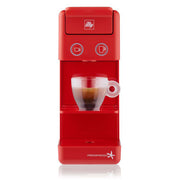
Product Spotlight: Gaggia For Illy Plus

Posted By: Morgan Reddy
Posted At: Feb 15, 2011 at 1:54 PM
Related Categories: Gadgets, News, Semi Automatic Espresso Machines
2444 views

The Gaggia for Illy Plus Single Serve Espresso machine is the culmination of a joint venture between two of Italy's most respected coffee authorities. At first, Gaggia and Illy may seem like strange bedfellows but, upon reflection, the partnership makes perfect sense. Gaggia brings to the table its vast engineering expertise and rich history. After all, it was Achille Gaggia who invented the first espresso machine. With over 50 years of espresso innovation, Gaggia has earned its place as the #1 manufacturer of home espresso machines in Italy.

Gaggia's partner, Illy, has an unmatched reputation for delivering premium coffee and espresso; in fact, 2 million cups of Illy coffee are served daily in Italy, a true testament to the brand's popularity. One of Illy's most significant contributions to the espresso industry has been its invention of the revolutionary iperEspresso system. Unlike most single-serve systems, iperEspresso capsules use a patented two-step extraction process to ensure maximum flavor, aroma and crema extraction. Since the brewing process is self-contained within the individual capsules, you won't run the risk of contaminating your machine with residual coffee. iperEspresso capsules are available in medium, dark and decaf roasts.

So, what do you get when you combine the efforts of Italy's leading espresso authorities? The Gaggia for Illy Plus, of course!

This groundbreaking machine is designed especially for the iperEspresso system and it brews espresso so good you won't believe your drink came from a capsule. It's one thing to streamline and simplify the brewing process, but it's rare for single-serve espresso to taste as good as its hand-brewed brethrens.

BrewingStandard Operating Procedure
Once you insert an iperEspresso capsule into the machine and press the brew button, the Gaggia for Illy will pre-infuse the coffee to bring forth its full flavor and aroma. The espresso will, then, be extracted and dispensed from the capsule's patented e-valve. Coffee is never exposed to the Gaggia for Illy Plus, so there's no post-brew cleanup to speak of and your drink is guaranteed to be completely pure. After your beverage has been extracted, the Gaggia for Illy Plus automatically discards the capsule into a dedicated container, so you're free to simply walk away and enjoy your espresso.

Frothing MilkSteam it up
Like all Gaggia machines, the Gaggia for Illy Plus has pretty impressive steaming and frothing capabilities. In fact, Gaggia didn't scrimp on this single serve unit; it comes outfitted with the famous no-burn Pannarello steam wand. You'll be able to create rich steam and froth for lattes and cappuccino; it's the best of both worlds—the convenience of a single-serve machine with the steaming capabilities of a semi automatic.

The Details
Now that you have an idea of what the Gaggia for Illy Plus can do, here's how it does it...This machine is powered by a 15-bar pump and robust stainless steel boiler. The brew button is programmable to allow the Gaggia for Illy Plus to adapt to your preferences. You can set the brewing duration and subsequently drink volume by pressing and holding the brew button; this is one of the unique features that distinguishes the Gaggia for Illy Plus from its peers. Also exclusive to the Gaggia for Illy Plus is the adjustable cup holder and drip tray; it can be raised or lowered to make room for cups and mugs of all sizes. Water purification comes courtesy of a Mavea filter, which removes minerals from the contents of the one-liter reservoir to prevent scale buildup.

Gaggia For Illy Plus with iperEspresso capsulesIf you've ever wanted to try a single-serve espresso machine, take the jump with the Gaggia for Illy Plus. The compact footprint of this machine makes it perfect for home use or stash it in your desk at the office and be prepared when a caffeine emergency strikes! Want to see the Gaggia for Illy Plus in action? Take a moment to watch our YouTube video.
Read Full Story

A Closer Look At The Espresso Cup

Posted By: Morgan Reddy
Posted At: Sep 22, 2010 at 10:36 AM
Related Categories: Accessories
5879 views

There are some pretty impressive gourmet restaurants out there. At times, the food may be debatable, but the presentation is always impeccable. Great chefs know that a part of the culinary experience lies in the table service. You just don't serve a gourmet meal on disposable plates. And, so it is with fine espresso. But, it's not solely aesthetics; the cup you're extracting into could have a tangible impact on your espresso.

Everything from the shape, size and material of a cup should be taken into account. Though there is no "standard" shape for an espresso cup, most of them tend have to a softly rounded form that is narrow at the bottom and gets progressively wider at the rim. The wider opening at the top is said to enhance crema presentation, while narrow bottom encourages espresso flavor concentration. The shape also allows to the cup to retain heat evenly so that you don't get hot and cold spots within your beverage.

Illy Almodovar CupsThe size of the cup is also critical. A widely respected espresso authority, the World Barista Championship (WBC), states in its Rules and Regulations that espresso must be served in two- to three-ounce (60-90ml) cups with handles. The Gaggia Logo, Rancilio Logo, Pasquini Logo, Illy Almodovar and Julian Schnabel espresso cups are all solid choices that fall within WBC guidelines. Espresso cups are made tiny for a reason. The compact size of the espresso cup is designed to promote heat retention by reducing the surface area exposed to the air. Also, a single shot of espresso is only 1-1.5 fl.oz, while a double shot barely tips the scale at 2-2.5 fl.oz, so the espresso would be lost in a large cup. A 2-ounce cup is perfect for a single shot; if you're brewing a double go for a 3-ounce demitasse.

Gaggia Logo CupsEspresso-machine manufacturers go through great lengths to ensure heat stability during the brewing process, but once the espresso is extracted, it's up to the cup to prevent heat loss. We always advocate preheating your cups, but you can also guard against premature cooling by paying close attention to the material of your espresso cup. Most demitasses are made of porcelain, as it is an excellent insulator. Though, you should keep in mind that there are different grades of porcelain. Porcelain created using high firing temps is tougher and more durable; most connoisseurs prefer thick porcelain espresso cups like the Bodum Pavina Grip Porcelain, Francis Reptilia or Gaggia Platinum cups. Also particularly adept at heat preservation are double-walled cups. The contents stay hot while the exterior of the cups remain cool to the touch; if this is appealing to you, check out the Bodum Pavina, Assam or Canteen Glass cups. Of course, glass cups also have the added advantage of allowing you to see and appreciate your espresso.

Next time you're pulling a shot, take a moment to consider the cup! Good espresso deserves to be enjoyed from great cups.
Read Full Story

Essential Tools To Create Latte Art

Posted By: Tracy Schafer
Posted At: Aug 27, 2010 at 4:58 PM
Related Categories: Coffee and Espresso, Semi Automatic Espresso Machines, Super Automatic Espresso Machines
1630 views

Do you want to take your espresso experience to another level? Have you ever been served a latte that contained Latte Art? Most people are intrigued by this unique art form and are surprised to learn that this “art” can be performed right at home.

What is Latte Art?

Latte Art refers to the patterns, made in the foam, atop an espresso drink. In order to create these images, a trained barista uses an assortment of tools. These tools are readily available and can be purchased by the average coffee lover for home use. Here is quick list of tools needed:

  • Milk
  • Frothing Pitcher
  • Thermometer
  • Latte Art Steam Tip
  • Cup

Before you start creating your foamed milk, you need to create a good shot of espresso to pour your froth into. Here is a link to the “Golden Rule" , which will outline how to create a perfect shot of espresso.

Milk

What is the best type of milk to create the perfect foam necessary to make Latte Art? This is a question that we get quite often. Milk does play a role in the type of foam that can be created. The first step is to start with very cold milk, which will lengthen the time you have to work with the milk to create foam. Milk with a high fat content will take less time to froth than low-fat or fat-free milk. The low-fat milk lacks butter fat and will create bubbles when you’re trying to achieve the micro foam necessary for latte art.

Frothing Pitcher

Frothing your milk in the right pitcher can make a difference. It is best to use a stainless steel frothing pitcher. Depending on the type of machine you are using, steam pressure may play a roll in the pitcher size you choose. You want to make sure that the pitcher you choose has enough room to allow the milk to roll inside the pitcher. Latte Art has become so popular that Rattlewear offers a frothing pitcher specifically for latte art. It comes complete with a tapered spout that helps with the “pour” process of latte art.

Thermometer

Temperature plays a very important role in the process of creating foam. Micro-foam is best created below 100?F, at this temperature; the bubbles are small and easier to break down than at higher temperatures. There are several thermometers available on the market today. The digital frothing thermometer delivers immediate results and works on a battery, or a tradition thermometer may be more your speed. Some thermometers may even come complete with a clip to hang on the side of your frothing pitcher.

Latte Art Wand

The Gaggia espresso machines come with a Pannarello wand. This wand is perfect for achieving foamed milk with ease. Gaggia also offers a Latte art wand that can be placed on Gaggia machines as well as the Saeco Royal Professional and Saeco Coffee bar. The wand’s simple one-hole design, allows the users to create micro foam.

Cup

Now that the final product has been achieved, it is time to showcase your art. Cups are available in many shapes and sizes. The cup size can be a factor in the final product and the “pour.” The most popular cups used in the industry are the ones with round bottoms, shallow bowl shapes and capacities between 6 to 12 ounces. We have a large assortment of cups available to allow you to showcase your art in style; here are some of my favorites:

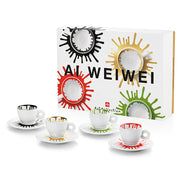
Illy Almodovar Cappuccino Cups

What better way to showcase your latte art than in an art-inspired, limited-edition cups from illy? Each cup is numbered and hand signed. They were created by Academy-Award winning film director Pedro Almodóvar and hold 8.8 ounces.

Classic Coffee & Tea Cappuccino cups

These cups look great and come complete in a great hat box. The colors are light and airy and each cup holds 7 ounces.

Bodum Bistro Double Walled Mugs

Let your drink be the showstopper. This double-walled glass will help your beverage retain its temperature, while keeping the outside of the glass cool. Be amazed, as the drink floats inside the double-walled glass. These mugs are available in 3 sizes: 10, 16 or 18 ounces.

Whole Latte Love Signature Cups

Our signature Whole Latte Love cup says it all. These are the perfect 12-ounce cups for latte art.

With these simple tools, you can be creating Latte Art from home in no time at all. We also have an Latte Art instructional video and a complete latte art package available for purchase. If you would like additional assistance, you can read Randy’s blog, titled “Frothing and Steaming Milk.” I hope this quick guide, helps you create great micro foam at home. Happy Frothing!

Tracy
Sales Department
Read Full Story

18 Blogs
< Previous 1 2

The ROK Espresso Maker

By Nick Brown The ROK Espresso Maker

CLICK HERE TO SEE THE ROK IN ACTION! My job allows me to play around with some pretty cool stuff, but today I had the opportunity to test out something awesome. If you haven’t already heard of the ROK espresso maker, let me tell you a little bit about it. It's a manual espresso machine from Presso, Ltd. and it’s making waves at the London Coffee Festival. Needless to say, I was stoked. So, I grabbed some coffee, our hot water kettle, and a few volunteers, and we went to town. There’s really a lot to like about this machine, but one of the first things that struck...

Read more...

How To Receive Your Nespresso Credit

By Nick Brown How To Receive Your Nespresso Credit

From now until June 17, 2013, Nespresso is running a promotion offering $50 of credit for their Nespresso Club program when you purchase a machine of $199 or more. You can find a link to Nespresso’s promotion page on any of the eligible machines we carry; alternatively you can follow this link here to register your machine with Nespresso. If you’re not already a member of Nespresso’s club program, you’ll have to register with them. After you click “CONTINUE” the next page will be where you enter the serial number of your new machine, upload your receipt, and select where you purchased the...

Read more...

Treat Yourself! Cinnamon Bun Latte

By Nick Brown Treat Yourself! Cinnamon Bun Latte

It's always exciting when we get new products, but it’s even more exciting when I can use them for recipes! So, I was obviously delighted when I discovered that we had not one, but three new varieties of Monin syrups that we would be adding to our repertoire of flavors: Cinnamon Bun, Banana Nut Bread, and Cupcake. And of course, there’s really no better way to showcase one of these new flavors than by putting it in a drink! I give you the Cinnamon Bun Latte. Ingredients: 1 oz. Monin Cinnamon Bun Syrup Double Shot Espresso 6 oz. Steamed Milk Whipped...

Read more...