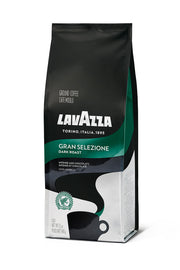
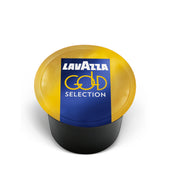
"Lavazza Espresso Coffee and Espresso Machines; The first class espresso experience…"
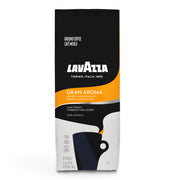
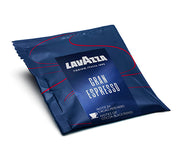
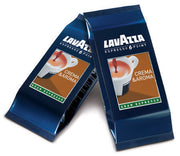
Lavazza’s seeds were planted in 1895 when a small grocery store in Northern Italy was purchased for a mere $20. Today, Lavazza is heralded as "Italy’s #1 Coffee," and with over 75% of Italy drinking their coffee, it’s hard to argue. Their lines of whole bean espresso, drip coffee and espresso pods are not the only shining examples of the company’s high-quality reputation. The two new single-serve capsule machines the Lavazza Blue 2210 and the Espresso Point have become a great way to enjoy the delicious taste of Lavazza.
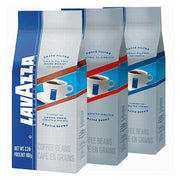
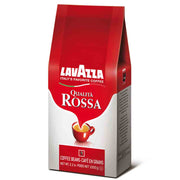
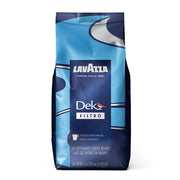
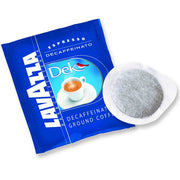
A perfect pairing of coffees and caffeine levels, this package of coffees will accommodate all your holiday guests. Included are two 8.8-ounce bricks of ground, lightly roasted Qualita Rossa, one 2.2-pound bag of dark roasted whole bean Crema e Aroma, and one 8.8 oz brick of the Dek Decaf ground espresso.
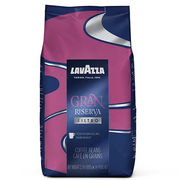
Lavazza Gran Riserva showcases Central American and Brazilian coffee with a balanced medium roast. Fine Indian Kaapi Royale washed Robusta has also been added to the blend to deliver rich, persistent crema. This coffee is prized for its vibrant flavor, aroma and enduring aftertaste. Lavazza Gran Riserva is available in 2.2-pound bags of whole bean coffee.
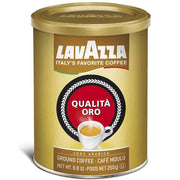
Combining the best Brazilian, Central American, and Asian beans, this smooth, chocolaty blend is an ideal foundation for cappuccinos and lattes. The Arabica/Robusta blend has a well-balanced and intense flavor that creates a delightful drink by itself, as well. Lavazza Gold can be used as espresso or with your drip coffee maker. Available in 2.2lb bags, whole bean.
It's a frightening prospect for some, but also a potential reality as the 2013 US Farm Bill remains as of yet, unpassed. The Farm Bill, which is actually a five year agricultural policy bill to help subsidize the cost of agriculture hasn't been pushed through as Congress remains embroiled in fiscal cliff debates. As a result of the bill's delayed passing, the price of grocery items could potentially spike, milk included. Could you imagine paying $6, or possibly even more money for a gallon of milk?
If the bill is delayed until April of 2013 as some expect it may be, there are really only three options: cough up the extra money, cut the milk, or find another creamer for your favorite drinks. I looked up some alternatives and some of the most commonly recommended ones were different kinds of plant milks, like soy or almond. This is a topic we've taken some interest in recently so if you have any questions for us about making drinks with milk alternatives, don't hesitate to ask!
Green coffee beans are usually shipped in 132lb bags, (60 Kilograms) and world-wide production statistics are compiled on the number of bags.
World production for 2012 includes 88,818 bags of Arabica and 62,440 of Robusta.
To give you perspective on worldwide coffee production and the rarity of some highly prized regional coffees like Hawaiian Kona and Jamaican Blue Mountain that make up a tiny fraction of all coffees, here are statistics for 2012 compiled by the US Department of Agriculture.

Brazil leads the world in total production again in 2012 with 40,200 bags of Arabica and 15,700 of Robusta for a total of 55,900 bags or 7,378,800 lb.
Vietnam is second for total production with 850 bags of Arabica and 24,150 of Robusta for a total of 25,000 bags or 3,300,000 lb.

The United States, mostly Hawaii, (100/0) and Mexico (4,500/200) make up North American production of 4,600 bags of Arabica and 200 bags of Robusta.
Central America produces 14,605 bags of Arabica and 10 bags of Robusta from: Costa Rica (1,600/0), El Salvador (1,475/0), Guatemala (3,840/10), Honduras (5,800/0), Nicaragua (1,800/0) and Panama (90/0).

South American countries including Bolivia (4/150), Brazil (40,200/15,700), Colombia (7,500/0), Ecuador (415/190), Paraguay (25/0), Peru (4,800/0) and Venezuela (880/0) combined to produce 53,970 bags of Arabica and 15,890 bags of Robusta.
Caribbean countries produce 920 bags of Arabica from: Cuba (125), Dominican Republic (475), Haiti (300) and Jamaica (20).

Middle East coffee comes from Yemen at 150 bags of Arabica.
Papua New Guinea, 1,100 bags of Arabica and 50 bags of Robusta, represents Oceania’s total production.
South Asia contributes 1,650 bags of Arabica and 3,685 bags of Robusta from: India (1,640/3,660) and Sri Lanka (10/25).


Sub-Saharan Africa contributes 9,243 bags of Arabica and 7,580 bags of Robusta from: Angola (0/30), Burundi (225/0), Cameroon (100/700), Central African Republic (0/15), Kinshasa (200/165), Cote d'Ivoire (0/1,800), Ethiopia (6,500/0), Ghana (0/90), Guinea (0/425), Kenya (850/0), Liberia (0/5), Madagascar (25/500), Malawi (25/0), Nigeria (0/30), Rwanda (250/0), Sierra Leone (0/70), Tanzania (500/300), Togo (0/650), Uganda (650/2,800), Zambia 10/0) and Zimbabwe (8/0).

Well I am back from vacation and decided to combine my love of coffee with an urge to experiment and set out to find a new way to beat-the-heat-wave we are experiencing with something cold, refreshing, extremely smooth, and fun to drink!
My experimental premise was that the coffee had to be cold-brewed. Research revealed that first you need a vessel to hold the coffee and the liquid. Even though I work for the greatest coffee brewing machine sales company ever, I couldn’t find anything quickly that fit my idea of cold-brewing. But I’m a country-boy and we learn to be very resourceful. I found my vessel, a two-liter empty pop bottle. Perfect!
To make the brew I decided to use one of my favorite all-around whole bean espresso coffees, Lavazza Pienaroma. To grind the coffee I used the Baratza Virtuoso Preciso with the Esatto electronic-scale base attachment and set the grinder to 12 with the micro adjustment set in the middle. I then programmed the Esatto to deliver 70 grams of ground coffee.
With my vessel ready and the coffee ground, I combined the coffee with roughly 50 ounces of water. I gave the bottle a shake and I put it in the office fridge for the next 12 hours.
The next morning I excitedly pulled the bottle out of the fridge and had to stop and think for a second. I forgot that I needed to extract the coffee grinds from the liquid. Lucky for me I did have a coffee carafe nearby and a brew basket with a paper filter that fit on it. Extraction was a success! I then tasted the coffee with no additives. The first thing that came to my mind was “where have you been my whole life.”
The coffee was incredible smooth and had little to no acidity to it at all! Now I had the base to make a cool drink!
A quick search on the Internet revealed exactly what I had in mind, a Toddy Coffee! I mixed it to my liking:
It made about 10 ounces. Let me tell you. If you’re looking for a fantastic summer beverage this is the way to go. I am now completely addicted to these. Well thanks for taking a trip down an unknown path with me. Till next time: for the love of coffee!
The weekend is usually a time to kick back and relax, but, if you're like me, it's also a perfect opportunity to experiment with some new recipes! As the dog days of summer close in, cool off with a refreshing caramel frappe, or liven up your nights this weekend with an espresso martini!
You can find frappes almost everywhere these days, but nothing beats the comfort of your own kitchen. For the Caramel Frappe you're going to need:
![]() |
|
Combine your ingredients in a blender and blend until smooth. Top with a swirl of whipped cream, and drizzle with caramel for an icy treat to beat the heat!
Our next recipe comes from Whole Latte Love's very own Dan Moraldo. Coffee really does mix well with just about anything, so a martini is an excellent choice! For the Espresso Martini you're going to need:
![]() |
|
When you make this drink, you're going to want to do a few things ahead of time:
Combine the espresso, vodka, and liqueur with the ice and shake vigorously. When they're fully mixed, strain into your chilled glass. As a finishing touch, add three coffee beans (one for health, one for wealth, and one for happiness) and enjoy!
Lavazza Espresso Point Review:
What I Like:
Looks & Material
The Lavazza Espresso Point has a great look to it. The machine is wrapped in a stainless steel with gold accents. There also is is a light that will illuminate where the cup is placed. Its not going to make your coffee taste better but it looks nice.
Easy Brewing
With the Lavazza Point there is no need for grinding or tamping. Simply add the capsule to the machine, select the amount and watch your cup being filled. After the capsule is used, the machine will drop the spent capsules into the drip tray where you can remove later.
Brewing Options
The Point has several different coffee capsule choices along with a full tea line. They also have hot chocolate and consomme options. I really enjoy the Crema & Aroma and the Verde tea.
Steam Wand
To go along with easy brewing the Point features an easy to use steam wand that will do a good job at steaming and frothing milk for cappuccinos or lattes. There is a handle on the steam wand so that you are able to froth with ease without burning your had on the wand. The wand can also be used for hot water if you wanted an americano or water for tea.
Cup Warmer
On the top of the machine you will notice the rails. The cup warmer is on the top of the machine and the rails keep the cups from falling off. The point features a passive cup warmer that does a great job of keep your cups hot.
What I would Change on the machine
Water Reservoir
This machine is a great choice for an office environment. It would be nice to have the ability to plumb it directly to a water supply.
Drip tray
If the machine was to be placed in an office setting it would be nice to see the drip tray be able to hold more spent capsules. Its hold plenty but more is always better.
Recommended Environment
I would recommend this machine to anyone who wants the convenience of a capsule machine. The lavazza does a great job of offering quality coffee without skimping on selection. I would also recommend this to someone who is looking for an easy to use machine for their small office. Simple to use controls and a great product make the Lavazza Point a great choice.
While exploring our site, you may notice that we've broken our coffee selection down to two main categories: espresso and drip coffee. To an outsider, the difference between drip and espresso coffee is dubious, at best. Most people simply accept that grind fineness determines if a coffee is destined for the espresso machine or coffee maker. While the grind is a major contributing factor, it is not the only determining factor.
If you're talking about whole bean, any combination therein can be ground for drip coffee. However, not all coffees are suitable for espresso. Espresso usually requires a blend, consisting of three or more origins, since the hallmark of a good shot is rich crema—which can only be achieved under the right conditions. That's not to say drip coffee doesn't have its distinguishing traits.
Many roasters will designate certain coffees for drip, as opposed to espresso. Without the need to deliver crema, there's a little bit more leeway to play with when creating drip coffee. For instance, you may find a nice bouquet of flavors and aroma in drip coffee that's not otherwise available in espresso. Caffe D'arte Meaning of Life and Gourmet Drip Whole Bean (available in medium and dark roasts as well as decaf) are prime examples of exclusive drip coffee blends. The roaster has taken into account the slower brewing process and lower temperature used to create drip coffee and altered the composition of the blend to suit.
Drip coffee is also well suited to savoring the specific flavors and aroma of a single origin. A lot of single-origin coffees are meant for your drip coffee maker. In fact, some of our most prestigious single-origin offerings are classified as drip coffee including: Supreme Bean Organic Rainforest, J Martinez Jamaica Blue Mountain and Antica Tostura Triestina's 100% Arabica Ground.
If you're a flavored coffee fan, drip coffee is the only way to go. Thanks to the gentle brewing process used to create drip coffee, roasters are able to infuse a wide variety of flavors and aroma into the coffee and have them translate in the cup. When well-done, the result is a fine drip coffee with exotic notes. Try Aloha Island Chocolate, Hazelnut Paradise or Vanilla Dream (available in ground and whole bean), if you're tempted by flavored coffees.
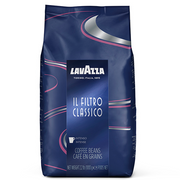
Another hallmark of drip coffee is the caffeine content. Although a lot of people assume that espresso contains more caffeine than drip coffee, one of Whole Latte Love's own staff members, Mike, has effectively debunked this myth in his blog. The truth to the matter is, when compared by serving size, drip coffee actually contains more caffeine than espresso. It also has a lighter body, when compared to espresso, which tends to be more viscous by nature. If you're an espresso fan looking for lighter fare, consider taking the plunge with well-known roaster. Lavazza and Illy both offer drip coffee options. If you enjoy their respective espresso blends, give these roasters a shot when you want a cup of Joe.
A well-brewed cup of Joe can be every bit as enticing as a shot of your favorite espresso. We're not talking about the slush served at the local diner or gas station, so put your mind at ease. One of the best ways to sample great drip coffee is through—surprise—a sampler. We currently have 14 packages available, with premium coffees from Whole Latte Love, Lavazza, J. Martinez, Aloha Island and more. The summer is almost upon us, don’t let it go by without an ice coffee in hand!Most espresso lovers are open to experimenting with different blends, various grinds, tamp pressure and more in pursuit of the perfect beverage. But, few are actually brave enough to attempt roasting a custom coffee at home.
Unlike brewing, frothing, tamping and grinding techniques, much of the roasting process is shrouded in secrecy. As a chef may guard a prized recipe, many roasters consider their particular roasting method a trade secret. The knowledge used to transform a green bean into premium coffee is often guarded under lock and key. That's not to say you're doomed to be shut out of the roasting world. If you want to try your hand at creating a custom coffee, keep in mind that the roasting process is rooted in hard science. Understanding a few key concepts and exercising a little patience can get you well on your way to being a home roaster.
The Process
You'll need most of your five senses in order to create a successful batch of roasted coffee—hearing, sight and smell in particular. Before you begin, take a moment to make note of the color of your un-roasted beans.
It takes quite a bit of heat to transform the average green bean; we're talking 460°F -530°F. Heating virtually anything at these temperatures will generate a certain amount of smoke and odor, so it's best to roast by an open window or an otherwise well-ventilated area.
As they are introduced to heat, your beans will first turn yellow and then begin to brown. Listen carefully, a few minutes after your green beans being to roast, you'll hear a cracking sound. At this point, the natural sugars found in the beans are starting to caramelize and you have achieved a light roast. The steam being emitted will also begin take on a roasted coffee scent.
Keep roasting, if you want a medium or dark roast. If you leave the beans exposed to heat beyond a medium roast, you'll hear a second crack. At this point, you should have a very dark roast. Do not venture much beyond this point, your beans will begin to burn and the natural sugars will all be gone, leaving you with very bitter coffee.
After your beans are done roasting, they will need to be cooled before they can be stored. If you like the results, set aside some of the beans so that you will have a reference point for the next batch. Otherwise, keep experimenting!
The Equipment
I've heard of people roasting coffee in everything from a popcorn popper to a skillet and even a cookie tray in the oven. The popcorn popper seems to be the most popular improvised coffee roaster. However, it is important to keep in mind that using your popcorn popper to roast coffee will most likely void the warranty as it is certainly outside its intended use. At proper roasting temperatures, 460°F -530°F, you will be pushing the limits of the popper to the max. Don't be surprised if it burns out within a few short months.
My advice? Use the popcorn popper as it was intended; invest in a coffee roaster if you want to make coffee at home. Makeshift methods may not yield the proper results and could pose serious safety risks.
If the goal is to create a semi-professional roast, a coffee roaster is definitely the way to go. Not only are coffee roasters designed to deliver an even roast, they also offer greater heat control. The Nesco Professional Coffee Bean Roaster, available on our Website, goes above and beyond; it is the only home roaster with a catalytic converter to eliminate unpleasant smoke and odor generated by the roasting process. This model also has a dedicated roasting chamber and auger to mix your beans and ensure an even roast.
Roasting is very straightforward with this Nesco model. It has a 1/3-pound capacity, which should yield enough beans for approximately 36 cups of coffee. There's a powerful heating element and two-speed fan to direct heated or cooled air through your coffee as necessary. The Nesco Professional Roaster's most convenient feature is arguably the recall option, which will let you store and recall the roasting duration. This feature makes it easy to replicate previous results.
Priced under $250, the Nesco coffee roaster is an affordable way to create fresh, custom coffee. If you're a true espresso lover, roasting your own coffee at home is an experience worth exploring.
In this video, we’ll be talking light and dark-roasted coffee. We’ll be brewing with Lavazza, Illy, Whole Latte Love, and Filicori Zechinni coffees to give you an in-depth look at the different types of coffee roasts.
If you're tired of the same old drinks, break out of the rut with a creative latte. This month's recipe is perfect for the adventurous latte lovers out there.
Ingredients
- 3 shots of espresso
- 6 oz of milk
- ½ oz of Monin Dark Chocolate Syrup
- ½ oz of Monin Caramel Syrup
- ¼ oz of Monin Hazelnut Syrup
- Ice
Preparation
In a tall 16oz glass, combine the espresso, syrup and milk. Stir the contents and add ice. Garnish with whipped cream, if desired, and enjoy!
The Lavazza Espresso Point machine is a great machine, if you are looking to make quality espresso without having to grind and tamp. The Lavazza Point uses Lavazza capsules, so brewing a shot has never been easier. Just insert the capsule into the machine, press the desired button and you will be enjoying fresh espresso within moments. The Lavazza Espresso Point has solid brewing and steaming capabilities; it would be a perfect addition to any household.