USA
USA


Rancilio Silvia Review

The Rancilio Silvia is a machine that can be considered one of the pillars of home espresso. Apart from the Gaggia Classic and the La Marzocco GS3, there are few machines that can rival its ubiquity and longevity. In honor of the recently released Sage Green Silvia that dropped this year, I thought it would be a good idea to take a look at the Silvia in 2025 and its place in modern home espresso. We’ll also cover a bit of the Silvia’s history as it ties directly into our own.
A Brief History of the Silvia

Rancilio got their start as a manufacturer of commercial espresso machines in 1927, founded in Parabiago Italy by Roberto Rancilio. To this day they remain active in the commercial market, but for the purposes of this story it would take them 70 years to introduce the star of this blog. The Rancilio Silvia debuted in 1997, the same year that Whole Latte Love first opened. Originally it was made as a thank you gift to Rancilio importers, but by 1998, Whole Latte Love founder Gary Salzman had convinced them to let him sell the Silvia online as a home unit where it has remained to this day.
The Silvia in 2025

So, how does the legendary Silvia hold up in modern times? That’s what we’ll be answering. I’ve paired it up with the new(ish) Stile grinder and I’ll be putting both to the test. I was really excited to see how well the Silvia and Stile meshed aesthetically given the recent discontinuation of the Rocky grinder. I was also curious to try out the grinder in general. The Silvia definitely outgrew the Rocky in my opinion and I wanted to see how well the two performed together.
Design
The Silvia’s iconic design has persisted as long as the machine. Its three button layout on the left and centrally located power button have remained as core elements of its visual identity since its debut. The buttons and their order are “Brew,” “Water,” and “Steam.” In the center, the power switch has a pair of lights next to it, the power LED and the thermostat LED. When the machine is on, the top LED glows green. The bottom LED will stay illuminated for as long as the machine is heating and will switch off once the boiler has reached either brew or steam temperature.

Like many single boiler machines, the Silvia also has a dedicated switch to run the pump, allowing you to refill the boiler after steaming and to dispense hot water through the steam wand. The current Silvia (which some have taken to calling V6) wears its commercial heritage proudly with the same steam knob and portafilters as the Classe 5. Truth be told, the new portafilter is the only actual change from what was previously known as the “Silvia M” and the machine still has the same 0.35L brass boiler and 58mm group as before.

I’ve you’ve never used a Silvia, it’s as intuitive as any single-boiler machine. There’s a 3-way solenoid valve in the brew group that plumbs into the drip tray and the top panel is held on with six easy-to-access screws so you can open the machine up for maintenance. The drip tray has always been a sticking point for me as it feels a bit awkward to remove and is fairly shallow (it reminds me a bit of the drip tray in the Stone Lite).
Aesthetically there are few machines as iconic as the Silvia, with its industrial charm and tasteful balance of black accenting that especially benefits the new white and sage green versions.
Performance
Brewing

As a single boiler machine with thermostats to regulate brew temperature, brewing on the Silvia becomes a matter of ritual in order to achieve consistency. I’ll include a graph of our temperature testing results below, but we found that if you simply allow the Silvia to heat until the light for the brew thermostat turns off, the water in the boiler is simply too hot to brew with. We clocked it at around 210° F with our thermocouple probe, so I had John develop a flush routine to cool the boiler enough to extract at around 200° F on average.
Rancilio Silvia 200° Flush Routine

Based on several tests, we found the ideal surfing routine looks something like this:
- Heating Light Turns Off
- Flush for 12 Seconds
- Wait 20 Seconds
- Pull Shot
A longer flush could be used to further reduce temperature, or a shorter flush for hotter brew temperatures. It’ll come down to the type of coffee you’re brewing and what temperatures are best for it. Out of the box you'll be getting an 8.5 and 16g basket to play with. If you're temperature surfing like we outlined above, you'll do just fine with a wide range of medium roast blends. Just be sure not to overdose your basket if you don't pick up a higher capacity one.
If you're feeling limited by the necessity of temperature surfing and are looking to get the most out of specialty coffees, a PID regulated machine like the Profitec GO might be more your speed.
Steaming

The Silvia has long been regarded for its powerful steam and quality commercial steam wand. A popular mod for older models of the Gaggia Classic used to be to install a Silvia wand in place of the pivoting steam wand that came stock before Gaggia upgraded to a commercial steam wand. During our shoot for this review, I asked Zach (who recently won the latte art throwdown at Aporia Coffee) to give the Silvia a spin steam-wise so he could evaluate it.
The steam pressure on the Silvia makes me nostalgic as it feels like a throwback to the sort of explosive initial pressure on some commercial machines I’ve used in coffee shops. It was quick to heat up and even faster to steam with great texture. The single hole steam tip allows for some impressive steam penetration, which is key to creating a better foam stability and a tighter packing of bubbles leaving great textured milk! It is no wonder that this machine has been the go-to for many latte artists to practice at home with in preparation for competitions.
We also performed our standard steam test with the Silvia, but in general it’s safe to say that the machine performs well for steaming, capable of frothing 5oz of fridge temp milk to 140° F in as little as 20 seconds with texture perfect for latte art. Outside of our first test, the Silvia was adding roughly 10% water to final weight of the milk when we were done steaming.

Rancilio Silvia with PID

In addition to the stock Rancilio Silvia, we also offer a version that has been outfitted with an Auber Instruments PID controller. Our version of the Rancilio Silvia PID has the following features enabled by the controller:
- Brew Temperature Control
- Steam Temperature Control
- Pre-Infusion Control
So, is the PID controller worth it? Well, I’m inclined to say yes, but I do want to offer up a few thoughts on the user experience that while minor, will take some getting used to. The Auber PID behaves a bit differently from controllers on any other espresso machines I’ve used before. When setting the PID for your brew temperature, you are actually setting the temperature inside the boiler, rather than the predicted group temperature which is the case for pretty much every other PIDed machine on the market. Auber has a graph in their user manual that can be used to determine how best to set the PID, and 218° will get you close to 200° at the group.

Setting steam temperature is also a bit different as well. You actually program two temperatures for steam, your max temp and a min temp and the controller will attempt to keep the boiler within this range. You can also use the controller to push the steam temperature past the stock limit of the thermostat, though increasing the temperature in this way could over-pressurize the boiler and cause the safety valve to blow.

The pre-infusion capabilities of the controller are impressive with programmable durations for active wetting, delay, and actual brewing. It offers similar control to something like the Profitec MOVE. Interestingly enough however, the solenoid valve closes after the initial pre-wetting and opens again once brewing starts. On the topic of the solenoid valve, the controller actually does not connect to the valve so in order to brew, the brew switch needs to be pressed at all times and a button on the controller needs to be pressed to start brewing. The hot water and steam switches function as normal.
So is it worth it? Honestly yeah I think it is, especially if you love compact single-boiler machines like I do and you’re looking to expand the Silvia’s performance with a few more modern features.
Portafilter and Accessories

The Silvia comes with the essentials for brewing espresso. At first glance, the portafilter looks similar to the Silvia Pro X, but it has a few subtle differences, namely that the texture is smooth plastic unlike the gripped rubber of the Pro X. The portafilter also features the Rancilio logo on the end for some added branding. Loaded in the portafilter is a commercial double shot basket and the single basket is fitted into a slot in the accessories box. The baskets are labeled as official Rancilio products which is something I appreciate if you ever have to tell your stock baskets apart from something third party. There’s also a backflush insert, not really a disc as it’s a rubber piece that covers the holes in the basket.

By far the most impressive accessory is the included 58mm tamper. It has a thick base with an iridescent sheen and the Rancilio logo, and the handle has a contour that fits well in the hand. I do want to point out that the spouts on all of the portafilters from the four different color machines we unboxed were all slightly angled from the factory. This appears to be a deliberate design choice and not an oversight in production.
Upgrades and Accessories

While customization on the Silvia might not be as robust as some machines, there’s still the option to swap out the stock shower screen with a precision nanotech one from IMS. There’s also a bottomless portafilter with the same Ranclio logo emblem on the handle as the stock portafilter.
The Rancilio Stile

To answer my question posed in the intro of this blog, does the Stile mesh well aesthetically with the Silvia? I’m pleased to say that they match incredibly well. There are only two colors to choose from with the Stile, black and white, so I will add the slight caveat that I think the black grinder is really the universal pick, matching not only the black Silvia, but also with the black accents present on all four colors. That said, Rancilio used the exact same white for the Stile as they do for the Silvia, so if you're planning to pair the two, you 100% want to match the colors.
Build quality wise, it was refreshing to get my hands on a grinder housed primarily in steel rather than the typical aluminum. The Stile’s housing is curved and wraps the same way as the Silvia’s so the two look very good together. Adjusting the grind is a two handed affair, requiring you to grab the adjustment wheel on both sides of the grinder in order to turn it. Adjustment produces soft clicking movement and feels both intuitive and precise. The bean hopper features a locking slide mechanism that shuts off the flow of beans when the hopper is unlocked for removal.
Stile OD

Grinding with the Stile OD works much like you’d expect any grinder to, but my suggestion is that you switch the operating mode to activate grinding with the portafilter rather than the touch screen. The Stile OD has two programmable doses as well as a third manual dosing option. You can either start grinding by placing your portafilter and then pressing your desired dose on the screen, or in “preselection” mode, you can select your dose and then insert your portafilter and press and hold to grind your desired dose. Personally, the controls on the screen aren’t the most intuitive, but once you’ve got things set to where you want them, you generally won't need to touch them again. Just pair the grinder with a good scale like the Varia AKU and you'll be covered.
Dialing in the Stile was fairly simple, though I found that I had jammed the grinder at least once and needed to coarsen up to free the burrs. Because you have to use both hands to change your grind, it can be tricky to keep the burrs moving when making an adjustment. Ultimately it didn’t take too long to find a spot that worked for us. My recommendation is to always look at the number on the dial on the right side of the grinder as it is the lower of the two and can be considered your “True North” when it comes to dialing in the Stile.

In operation, the motor is fairly quiet and coffee falls into the portafilter without clumps or significant static. Grinding speed didn’t blow me away, but for a home grinder I didn’t feel like it was excessive and the gripped portafilter holder felt very secure when holding both the spouted and bottomless portafilters.
Stile SD
Compared to the OD version of the Stile, the SD isn’t all that different. It has the same burrs, motors, housing, portafilter hook and even bean hopper, but it loses programmable doses in favor of basic start/stop operation. One playful addition by Rancilio is the inclusion of a chalk marker with the SD that you can use to write brew recipes on the front panel. I will say that for an ostensibly single-dosing grinder, using the same hopper as the OD doesn’t optimize the grinder to prevent popcorning or lower retention as you see on grinders like Mignon Zero or Ceado Chameleon.
Final Thoughts

At the end of the day, I was glad to spend some time getting reacquainted with the Silvia. As far as machines go, the Silvia leaves a good impression in terms of build quality and the included accessories. Where it comes up short is simply the fact that in the last 10 or so years, the field of single-boiler espresso machines has grown considerably, and the absence of any pre-infusion or temperature control leaves the Silvia feeling perhaps a little too firmly rooted in the past.
That said, the Silvia's explosive steam power, iconic form factor, and its place in the pantheon of home espresso machines are still very alluring, and with a beautiful new grinder to pair it with, the Silvia doesn't appear to be out of the race yet.
Things we Love
- Iconic Design
- Impressive Steam Performance
- Mod-Friendly
- Easy to Support
Things to Consider
- High Price Tag
- No Stock PID
- No External OPV
Photography by Grace Walker
Shop this Blog
-

Now Available with PID
The Rancilio Silvia is an iconic home espresso machine that has graced the countertops of home baristas for nearly 30 years. Defined by its powerful steam and rugged design, the Silvia is now available with a multi-function PID from Auber instruments to program pre-infusion, brew and steam temperature.
-
 The Rancilio Stile is a modern home espresso grinder with 58mm flat burrs and high quality steel housing that perfectly matches the iconic contours of the Rancilio Silvia.
 -
 This 58mm bottomless portafilter is designed to be used with Rancilio espresso machines and features an ergonomic handle.
 -
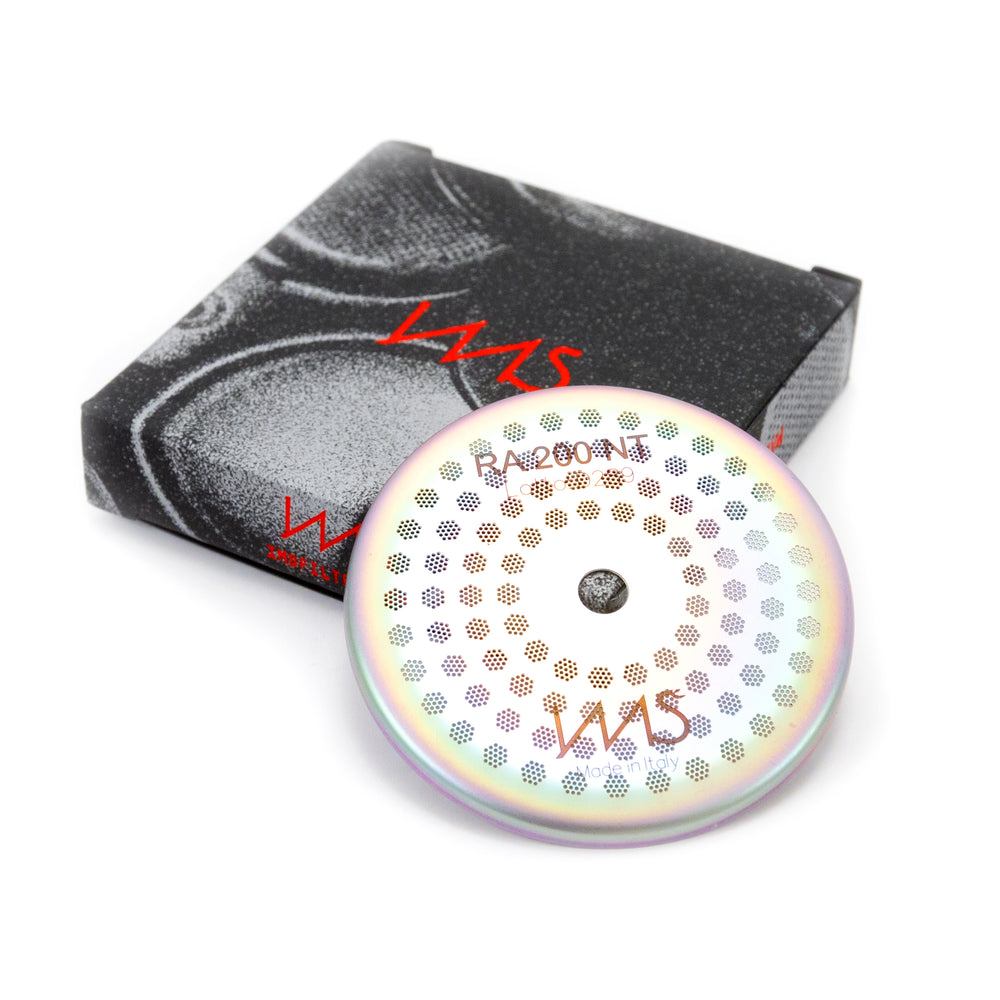 The IMS shower screen is a simple upgrade to improve the performance of your Bezzera BZ Group machine, or Rancilio Silvia/Silvia Pro. To install, just remove the bolt ...
 -
 Handmade in the USA, notNeutral’s VERO drinkware marries the style of traditional barware with modern design to achieve a set of coffee and espresso glasses that delivers on aesthetics and performance.
 -
Now Available with PID
The Rancilio Silvia is an iconic home espresso machine that has graced the countertops of home baristas for nearly 30 years. Defined by its powerful steam and rugged design, the Silvia is now available with a multi-function PID from Auber instruments to program pre-infusion, brew and steam temperature.


Related Articles

Gaggia Classic Pro E24 Review

Rancilio Silvia Pro X Review