USA
USA


Bezzera LUCE Espresso Machine Review

Bezzera’s been on a roll in the last few years. Since our visit to their factory in 2018 they’ve been hard at work, revamping their signature aesthetics and making some seriously cool espresso machines while they’re at it. Back then, we managed to get a sneak peek of the ARIA before its debut. Last year we launched the Whole Latte Love exclusive Bezzera SOLE which we’ll be talking about a little later in this blog. But today the real star of the show is the machine we’ve been keeping under wraps this whole time, the Bezzera LUCE. And let me tell you, it was worth the wait.
Enter the Bezzera LUCE
The LUCE (pronounced loo-chay) is the latest entry in Bezzera’s new era of heat exchanger espresso machines. That said, it’s built on a solid foundation as the successor to the soon-to-be-retired Magica PID. At first glance, you’d be forgiven for thinking that not much has changed, at least on the polished steel version that is (that’s right, it comes in color!). Now if you’re a big nerd like I am, then maybe you’ve also pored over parts diagrams to compare the machines to try and find where things overlap between the two. In the more likely scenario, which is that you aren’t, don’t worry, I’ve got you covered with a handy chart I put together at the end of this section.
As far as heat exchangers go, the LUCE is an incredible deal compared to what you pay for a number of other entry level heat exchanger machines. Whereas many manufacturers these days are playing in the space between pressure stats and PIDs on machines like the Profitec JUMP with its multi-position PID switch or the Rocket TCA with its variable pressure stat, the LUCE is equipped with a PID controller in the way we’ve come to know them. Tucked between the E61 and the steam valve, the LUCE’s PID controller allows you to adjust temperature within 1 degree increments between 176 and 212 degrees. In traditional Bezzera fashion the display shows the predicted brew water while the boiler itself is much hotter. As far as heat exchanger machines are concerned, this is a welcome alternative to having to look up a temperature chart in a user manual and our testing found that the PID is quite accurate.

On the topic of boilers the LUCE (and also the SOLE) uses the same 2L copper boiler found in the Magica PID. Bezzera has spoken about their affinity for copper as a boiler material as opposed to brass or stainless steel. The large boiler is joined by an ever larger 4L water tank making the LUCE tied for first alongside the SOLE for having the largest water reservoir of any home prosumer machine that we carry. Just like the Magica PID, the LUCE is equipped with a vibration pump and it cannot be connected to a home water line. Personally, I think it would be a great machine for break rooms, showrooms, teachers lounges, and any place where you need a machine that can handle back-to-back use without necessarily needing access to a water line.

$1,899.00 - $2,149.00
When it comes to looks, I feel that the LUCE settles in somewhere between the Magica PID and the SOLE. It has the same feet and panel style as the Magica, but the same logo, power button, gauge style and PID as the SOLE. It also shares the same four panel color options (stainless, black, white and sage green) as the SOLE meaning that with wood accenting and the option for flow control that the LUCE can be customized in over 40+ unique configurations. On both the front and back panels Bezzera’s reimagined Biscione logo looks pretty “metal” (by espresso machine standards) and the LUCE also ships with a nice powder coated aluminum tamper as well as a 10g single and 20g double basket.
Magica PID vs. LUCE


Brewing with the LUCE

If you have any familiarity with brewing on an E61 group espresso machine then the LUCE will be familiar territory. If not, here’s a basic primer; the LUCE being a heat exchanger machine has a single large boiler filled with steam and hot water that surrounds a small tube filled with brew water.
Thanks to the PID display you’re able to check the temperature at any time so there’s no guesswork involved with brewing. Bezzera also does things a bit differently with the PIDs on their heat exchanger machines and displays the predicted brew water temperature rather than the actual temperature in the boiler. So, if the display reads 202° F for example, the actual boiler temperature will be much hotter. Our recommendation is to let LUCE heat for 30 minutes before use and set the PID to 200° F. This will give the thermosiphon time to adequately heat the group and portafilter. After a five second flush, you'll be ready to brew with stable temperatures within +/- 1° F of where you set the PID.
Apart from showing current temperature, the PID also lets you know when the heating element is receiving power via a small dot that appears on the display. When brewing, the PID converts into a shot timer in order to help you time your extractions which is especially useful when dialing in.

On the topic of dialing in, the stock flow rate for the LUCE is 6.5g/sec (which is achieved by a 1 ¼ turn of the flow control knob when installed) so it’s ever so slightly lower than 7g/sec we’ve observed on vibration pump machines from ECM & Profitec. I kept the temperature at 200 and pulled shots with our Crema Wave, a medium roast espresso blend if you’re not familiar with it. The shots were nice and round with nice body and the nutty sweetness that’s characteristic of Wave (our nickname for it in the office). If you’re not in the market for flow control, Bezzera equipped the LUCE with an externally adjustable OPV that’s located right below the cup tray. This is a welcome addition that allows you to modify brew pressure between 4 and 13 bar.
Steaming with the LUCE

As heat exchangers go, the LUCE is tied with the Magica PID and SOLE for the highest capacity in our catalog. At a full 2 liters the boiler has more than enough volume to handle frothing larger volumes of milk, back to back drinks, and dispensing water for Americanos. Steam pressure hangs around 1.2 bar at 200 Fahrenheit and creates a manageable roll in the pitcher while frothing. After an initial drop, the LUCE hung around 1 bar for several seconds before gradually sliding to 0.9 and 0.8 after 30 or so seconds. The sheer size of the boiler and the copper construction give the LUCE great recovery. Performing the SCA test of taking 5oz of fridge temp milk to 140° it took just 16 seconds with only 11 seconds for recovery
ARIA vs. LUCE vs. SOLE


Anyone who’s considering a PID controlled heat exchanger espresso machine from Bezzera will find themselves spoiled for choice. But, if you’re also someone reading this article, then you’re in the right place. Looking at Bezzera’s three E61 heat exchanger machines there’s actually a good bit of difference between them. I’ve broken it out in a table below, but I’m also going to go into a bit more detail for each machine now that I’ve had some hands-on time with the LUCE.
Considering the Bezzera LUCE

Starting with the machine that this blog is really all about, the LUCE is a terrific option for anyone who enjoys milk drinks and either doesn’t have room in the budget for a rotary pump or ability or desire to connect a machine to a water supply. The 4 liter reservoir is huge either way, meaning the LUCE requires less refilling and can sustain more prolonged use than pretty much any other tank fed machine. Coupled with the large boiler and consistent steam pressure, you’ll find that the LUCE is a great choice for making multiple milk drinks back to back. Thanks to the PID you can enjoy stable brew temperatures and the option for flow control is there if you want to invest a bit more into your setup. For those who aren’t sold on flow control, the externally accessible OPV still affords a degree of customization over your extractions.
Considering the Bezzera ARIA

The ARIA was an impressive achievement for Bezzera, consolidating a plumbable rotary pump into the compact frame used on a wide variety of their machines including the BZ10 and Unica to name a few. This makes the ARIA the most narrow plumbable machine in our catalog and one of the most narrow prosumer machines we carry in general. Compared to the LUCE, the ARIA comes equipped with a flow control device by default and boasts a higher stock flow rate as a result of using a rotary pump instead of a vibration pump. The smaller reservoir is only a factor when you’re not plumbing the machine, but something to keep in mind if you’re considering the Aria for size or aesthetics instead.
In that same vein, the boiler is slightly smaller than the LUCE, along with a smaller workspace via the drip tray and the lack of an external OPV. The ARIA still offers very stable temperatures thanks to its PID and I would personally recommend the ARIA to smaller, more style-oriented households where flow control and plumbing were both high priorities.
Considering the Bezzera SOLE

On paper, the SOLE is actually very similar to the LUCE. Both have the same boiler and PID, same housing color options, brew group, etc. Where they differ is obviously the SOLE’s rotary pump which allows the machine to be plumbed and the taller, more stylized legs that accommodate the waterline fittings on the underside of the machine. The SOLE can be equipped with flow control like the LUCE but lacks an external OPV like the ARIA. Given its capacity both with and without plumbing, the SOLE is a great choice for households that enjoy milk drinks and/or frequent entertaining.
Final Thoughts

Having used the LUCE pretty extensively, I now have a pretty clear picture of what the machine does and who I’d recommend it to. Like I mentioned earlier, Bezzera has been making updates to their heat exchanger machines, and many of those changes on the LUCE are great. I’ll start by saying that visually, especially with color options like the sage green housing, the LUCE looks great but also distinctly “Bezzera” at the same time. The fast heat-up, PID shot timer, and external OPV make it very attractive as a more entry to mid-level heat exchanger and it has a huge reservoir and boiler. That said, the PID lacks some of the additional functionality found on machines from brands like ECM and Profitec which have a variety of pre-infusion features, eco mode, and backflush reminders. Flow control and a smart phone/smart plug ultimately wind up being pretty powerful equalizers on that front, so it’s not like the LUCE is completely shut out from those kinds of things.
If you love milk drinks but still want to experiment with different coffees, and if you want a high capacity machine but can’t necessarily plumb yours in, the Bezzera LUCE is an incredible choice and value at its price point. It also looks really good, and that always helps.
Shop This Blog
-
 The Bezzera LUCE is a striking, high capacity heat exchanger espresso machine with stable temperatures, consistent steam pressure, and a massive 2 liter copper boiler and 4 liter water reservoir.
 -
 The Bezzera Aria is a compact heat exchanger espresso machine that comes equipped with a plumbable rotary pump, PID temperature controller, and E61 flow control device. Its impressive array of features make it a perfect choice for both experienced home baristas and espresso newcomers.
 -
 The Bezzera Sole is a high-capacity heat-exchanger that doesn’t skimp on style to accommodate brewing and steaming power. It features a PID-regulated boiler, E61 group head with optional flow control, and near-silent rotary pump, making it extraordinarily versatile.
 -
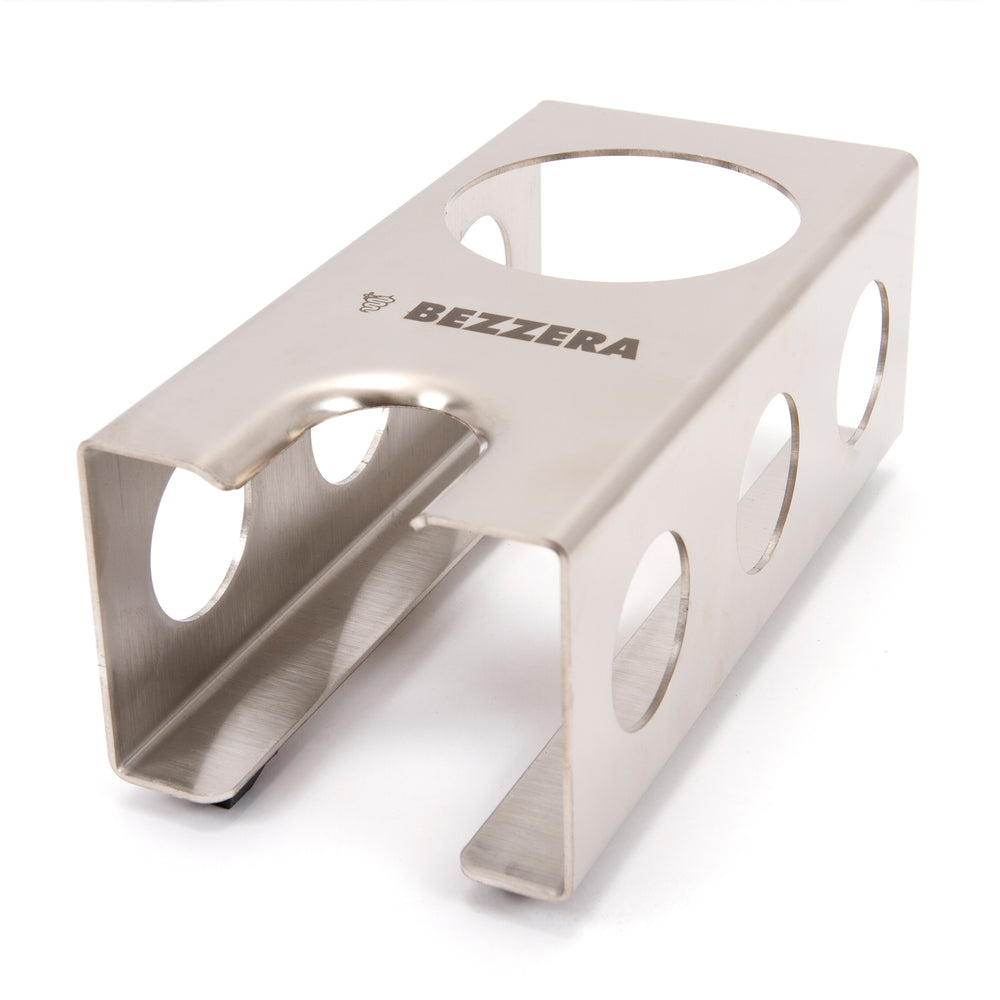 Durable and practical, the Bezzera Tamper Station is a must have accessory for anybody who owns a Bezzera espresso machine.
 -
 Bezzera’s Large Cappuccino Cup and Saucer Set gives an old-world Italian coffee house feel in any home, office or commercial environment.
 -
 Bezzera’s Espresso Cup and Saucer set brings bold Italian flair to any home, office or commercial environment.
 -
 Protect your counter in style with this heavy duty rubber tamping mat from Bezzera.
 -
 The Bezzera Coffee Leveler is an essential shot prep tool that distributes and polishes coffee in the basket prior to tamping.
 -
 The Bezzera Frothing Pitcher is a premium pitcher with a 15oz capacity and emblazoned with the Bezzera logo.
 -
 Bezzera's Needle Distribution Tool is a 58mm WDT solution to easily break up clumps and prepare a fluffy bed of coffee prior to tamping.


Related Articles

The Eureka Costanza Espresso Machine Review

Profitec MOVE Espresso Machine Review